
If the thought of decluttering with kids makes you picture chaos, arguments, and an even messier room than before, you’re not alone. Many parents want to simplify their homes with their children, but past attempts may have ended in frustration, tears, or total overwhelm.
The truth is, decluttering with kids isn’t about forcing tidy behaviour. It’s about structure, language, and small wins.
When approached calmly and strategically, involving children in the process can build confidence, responsibility, and cooperation while actually making your home feel lighter and more manageable.
This complete guide will show you exactly how to approach decluttering with kids in a way that works in real family life.
Why Decluttering with Kids Matters More Than You Think
Working through clutter together isn’t just about reducing toys. It’s about teaching decision-making, ownership, and emotional awareness.
When children are involved in sorting their belongings:
- They learn how to prioritise
- They practise making choices
- They build independence
- They feel capable
Each small decision reinforces their sense of control.
Imagine your child opening their toy cupboard and knowing exactly what they have – no digging, no frustration, no overwhelm.
Parents often notice that after regularly organising spaces with their children:
- Mornings feel calmer
- Bedtime routines improve
- Children argue less about “not finding things”
- Bedrooms become easier to maintain
Over time, these tidy-up sessions become a life skill rather than a punishment.
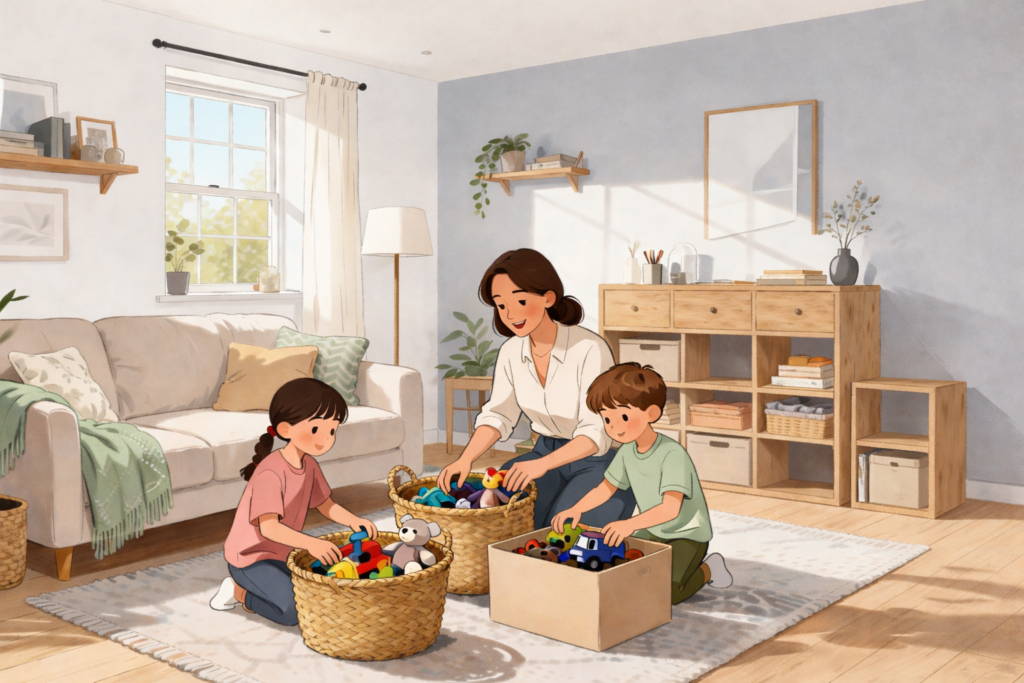
Before You Start Decluttering with Kids
Successful decluttering with kids begins before you touch a single item.
Choose the Right Time of Day
Avoid starting decluttering with kids:
- After school when they’re tired
- Before meals
- Close to bedtime
Choose a calm time when everyone has patience and energy.
Set Clear Expectations
Before you begin, say:
“We’re going to tidy one small area today. When we finish, we’ll stop.”
This prevents overwhelm and builds trust.
Decluttering with kids works best when the task feels contained.
Keep the Environment Calm
- Turn off background distractions
- Focus on one child at a time if possible
- Put on gentle music
A calm environment makes decluttering with kids far more successful.
How to Make Decluttering with Kids Simple and Successful
The secret to successful decluttering with kids is structure.
1. Start Small
Never empty the whole bedroom.
Instead choose:
- One drawer
- One shelf
- One toy basket
Complete that space fully before moving on.
Small success builds momentum during decluttering with kids.
2. Use Short, Focused Sessions
Children concentrate best in short bursts.
Set a 15–20 minute timer and call it:
- “Declutter Dash”
- “Sorting Session”
- “Treasure Tidy”
When the timer ends – stop.
Stopping on time builds cooperation for future tidy-ups.
3. Keep It Playful
Decluttering with kids works best when it feels light.
Try:
- Choosing the “Top 10 Favourite Toys”
- A colour-sorting game
- A race against the timer
- Creating a “Favourite Shelf”
When decluttering feels like play, resistance reduces naturally.
4. Guide – Don’t Command
Instead of telling children what to get rid of, ask:
- “Do you still play with this?”
- “Is this one of your favourites?”
- “Would another child enjoy this now?”
- “Would you wear this this week?”
- “Does this feel comfy?”
- “Do you love it, or just like it?”
- “If we keep this, where will it live?”
These simple shifts transform decluttering with kids from a power struggle into collaboration.
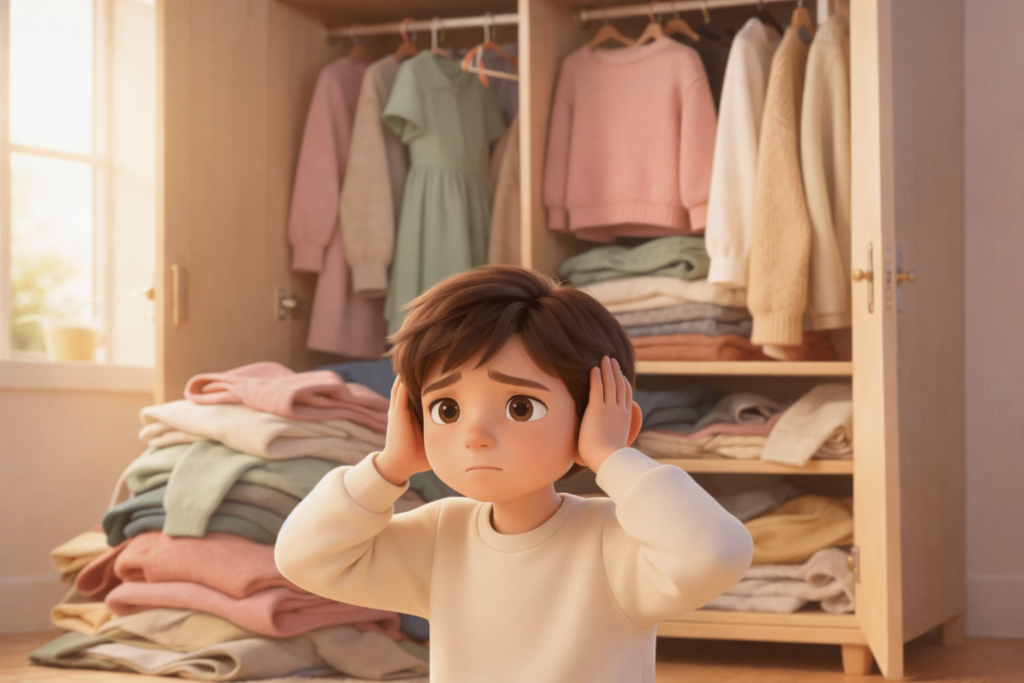
What Not to Say When Decluttering with Kids
Language has enormous influence when children are deciding what to keep.
Certain phrases instantly create resistance.
🚫 Avoid Saying:
❌ “You never play with this.”
❌ “This is rubbish.”
❌ “Your room is a mess.”
❌ “Just throw it away.”
❌ “You can’t throw that away.”
❌ “We don’t need this.”
These phrases can trigger guilt, shame, defensiveness, or loss of control.
For example:
Telling a child “You can’t throw that away” (often about gifts from relatives) can create unnecessary guilt. Children may feel responsible for protecting someone else’s feelings rather than making their own choices.
Decluttering together should feel safe, not pressured.
✔ Say This Instead
✔ “I haven’t seen this out in a while — do you still play with this?”
✔ “Is this still special to you?”
✔ “Let’s make more space for your favourites.”
✔ “Shall we keep it or let it go?”
✔ “Which ones make you happiest?”
✔ “Let’s make space for your games.”
These phrases invite cooperation.
When children feel included in the decision, their guard drops. They don’t feel judged, rushed, or overruled. Instead, they feel capable.
Asking, “Shall we keep it or let it go?” gives a clear structure while still allowing them to choose.
That sense of safety is what turns a stressful tidy-up into a collaborative moment.
When Your Child Doesn’t Want to Let Go
Even when you approach this process gently, resistance can happen.
Remember: it’s rarely about the object.
It may be about:
- Emotional attachment
- Memories
- Feeling rushed
- Wanting control
Here’s how to respond calmly.
Create a Memory Box
Give your child one small box for truly special items.
Limited space encourages thoughtful choices without pressure.
Use a “Maybe Box”
Place uncertain items in a labelled box for 30 days.
If they don’t ask for them, letting go becomes easier.
Take Photos of Sentimental Items
For artwork or bulky keepsakes, take a photo.
The memory remains – the clutter doesn’t.
Start With Easy Wins
Begin with:
- Broken toys
- Duplicates
- Incomplete games
Quick success builds confidence.
How Often Should You Be Decluttering with Children?
Regular maintenance is far easier than big clear-outs.
Consider:
- Before birthdays
- Before Christmas
- At the start of a new school year
- A 10-minute Sunday reset
- A donation bag once per term
Consistency makes family organisation sustainable.
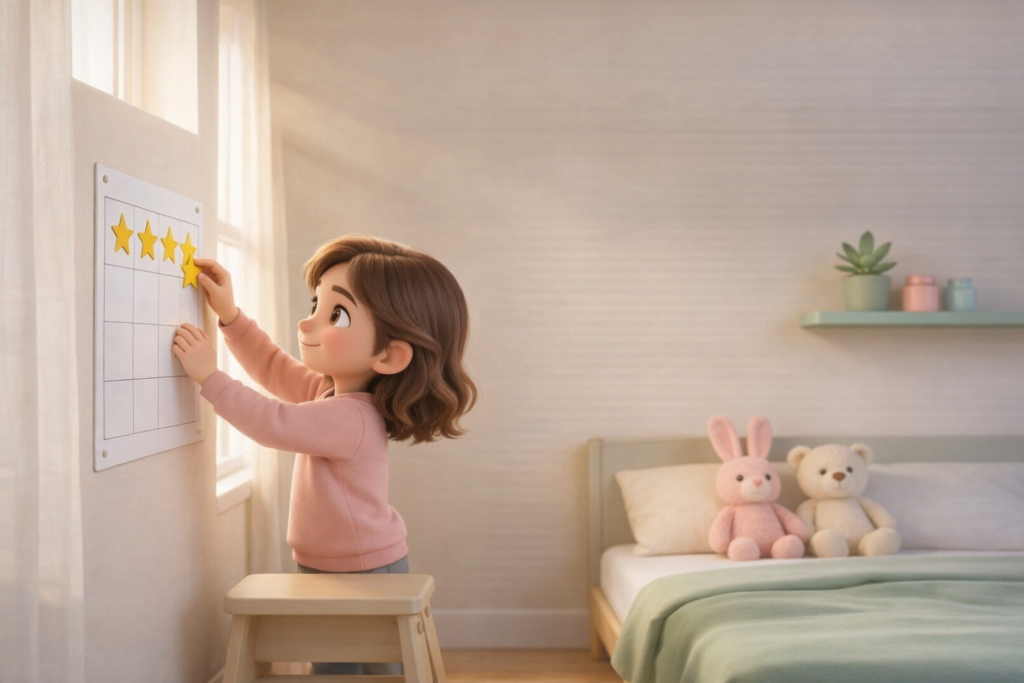
Using Rewards When Decluttering with Kids (And When to Avoid Them)
Rewards can be helpful when introducing new habits, but they should be used thoughtfully.
The goal isn’t to bribe children into tidying. The goal is to reinforce effort, cooperation, and progress.
When children feel recognised for their effort, they’re far more likely to repeat the behaviour willingly next time.
Here’s how to use them wisely.
When Rewards Work Best
Rewards are most helpful:
- When you’re introducing the habit for the first time
- When a child is building a new habit
- When they’ve made a difficult decision (like donating a favourite toy)
- When they’ve stayed focused during a full session
In these moments, a small reward reinforces positive behaviour and builds momentum.
Think of it as encouragement, not payment.
The Best Types of Rewards (That Actually Work)
The most effective rewards are simple and connection-based.
Try:
- A snack break after a session
- Extra story time at bedtime
- Choosing the next family film
- A trip to the park
- A sticker chart for completed sessions
- One-on-one time with you
For pre-teens, rewards should feel more age-appropriate and independence-based, focusing on trust, choice, and growing responsibility rather than stickers or small treats.
For example:
- Extra screen time (clearly agreed in advance)
- Having a friend over
- Staying up later at the weekend (clearly agreed in advance)
At this stage, feeling trusted and respected is often more motivating than any physical reward.
Notice how most of these aren’t material rewards. They strengthen connection rather than adding more “stuff”, which supports decluttering with kids long term.
What to Avoid
Avoid rewards that:
- Add more clutter (new toys every time)
- Are too big or expensive
- Feel like negotiation (“If you do this, I’ll buy you that”)
- Are promised before effort is shown
If rewards feel like bargaining, children may start refusing to help unless something is offered first.
Family organisation should feel like teamwork, not a transaction.
A Better Approach: Celebrate Effort
Sometimes the best reward is simply noticing effort.
Say:
“You worked really hard on that drawer.”
“You made such thoughtful choices.”
“That shelf looks brilliant because of you.”
Verbal encouragement builds internal motivation, which lasts far longer than sticker charts. chart.
Used wisely, rewards can make decluttering with kids feel positive and encouraging, especially in the early stages. The key is balance: celebrate progress, keep it light, and focus on building habits that last.
Frequently Asked Questions About Decluttering with Kids
What is the best age to start decluttering with kids?
Decluttering with kids can begin as early as toddler age using simple sorting and limited choices. The key is keeping it playful and short.
Should I declutter without my child?
For broken or unsafe items, yes. But for most items, involving them in decluttering with kids builds trust and long-term responsibility.
How do I make decluttering with kids fun?
Use timers, games, favourite-item challenges, music, and clear finishing points. Keep sessions short and celebrate small wins.
What if my child refuses completely?
Start smaller. Reduce the time. Choose easier items. Decluttering with kids is about gradual progress, not instant results.
How do I stop clutter building up again after decluttering with kids?
Create simple storage systems, keep a permanent donation basket, and schedule regular mini-resets. Maintaining decluttering with kids is easier than restarting from scratch.
The Long-Term Impact of Decluttering with Kids
Decluttering with kids isn’t just about today’s tidy shelf. It quietly shapes how they will manage their space and their belongings, as adults.
When children grow up involved in decluttering with kids regularly, they learn that things don’t simply pile up and disappear. They learn that homes need maintaining. They understand that space is limited. And most importantly, they begin to value what they keep.
Without realising it, you’re teaching:
- How to avoid impulse accumulation
- How to let go without guilt
- How to prioritise what truly matters
- How to create calm rather than chaos
Children who practise decluttering with kids develop awareness around “stuff.” They begin asking themselves questions like, “Do I really need this?” or “Where will this go?” long before adulthood.
This early awareness builds lifelong confidence.
They also learn that belongings should serve them, not control them -and that calm spaces support clearer thinking.
You’re not just clearing toys.
You’re shaping habits.
You’re modelling boundaries around possessions.
You’re teaching them that space has value.
And that lesson lasts far beyond childhood bedrooms.
Keep the Momentum Going
Decluttering with kids isn’t about perfection. It’s about progress.
One drawer today. One shelf next weekend.
Imagine opening your child’s wardrobe and feeling instantly calm. Imagine them knowing exactly where their favourite jumper is.
With the right approach, decluttering with kids becomes one of the most valuable habits you build as a family.
👉 If you ever feel stuck, Declutterella offers hands-on decluttering sessions designed around your pace.
If you’re based in Medway or anywhere in Kent and would like calm, structured support with decluttering with kids, I offer gentle, practical sessions that involve your children while keeping everything manageable. No overwhelm. No judgement. Just steady progress.
Final Thoughts
Decluttering a home with children can feel daunting at first, especially if past attempts have been stressful.
But when you keep it small, structured, and positive, everything changes.
Start small. Stay consistent. Keep it light.
👉 Discover more on our Blog or start your journey at Declutterella.co.uk/contact.